VariState AUTO
Automotive Configurator - 2026
The updated AUTO experience goes beyond a parked vehicle with paint swatches. Body variants, wheel treatments, upholstery, and cabin trim sit alongside guided views, door interactions, walking, and driving.
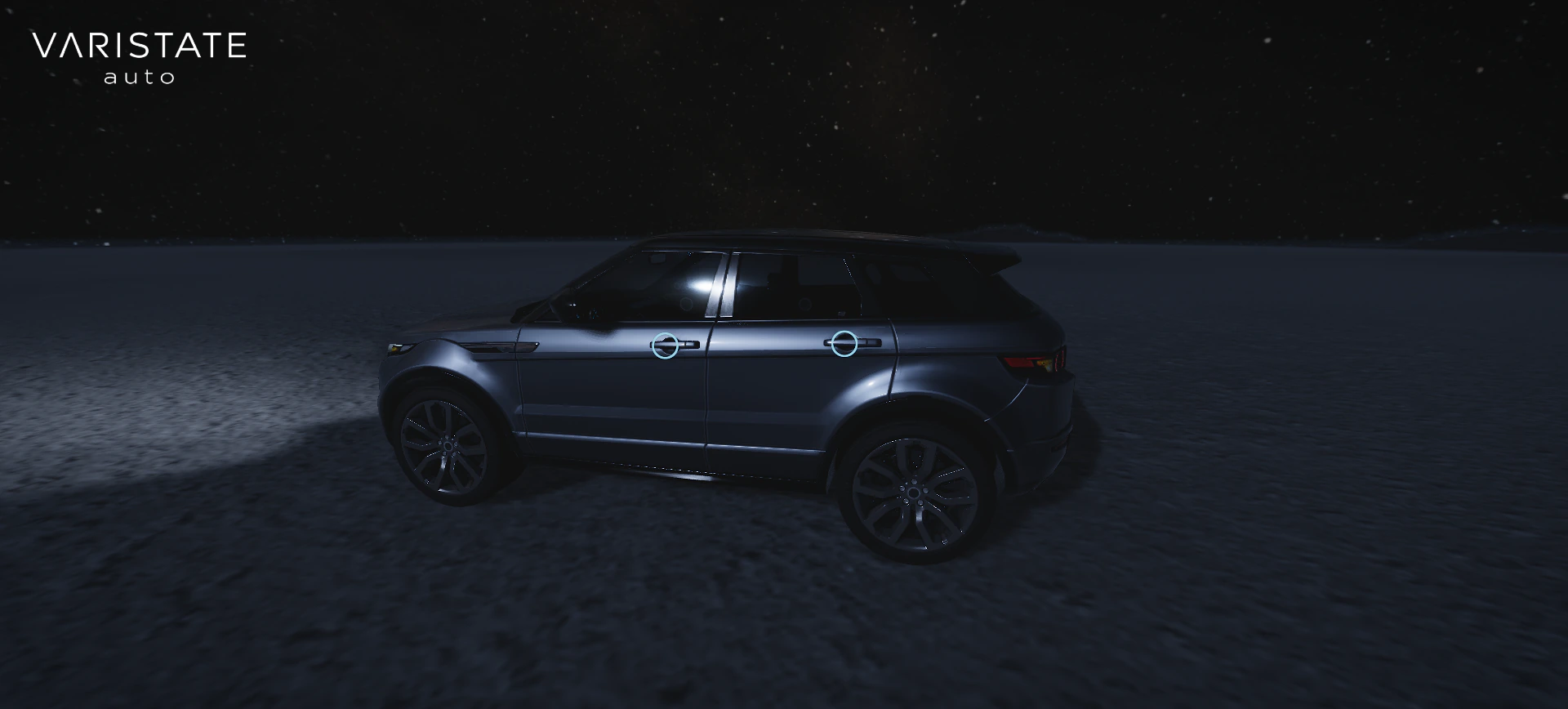
The same SUV can be compared in daylight, inspected from the driver’s seat, and seen under the night sky. Keeping those choices connected is the main job of the configurator.
Role: Experience Design, Real-Time 3D Development, Automotive Interaction
Stack: React, TypeScript, Three.js, ThreePipe, WebGL, Vite
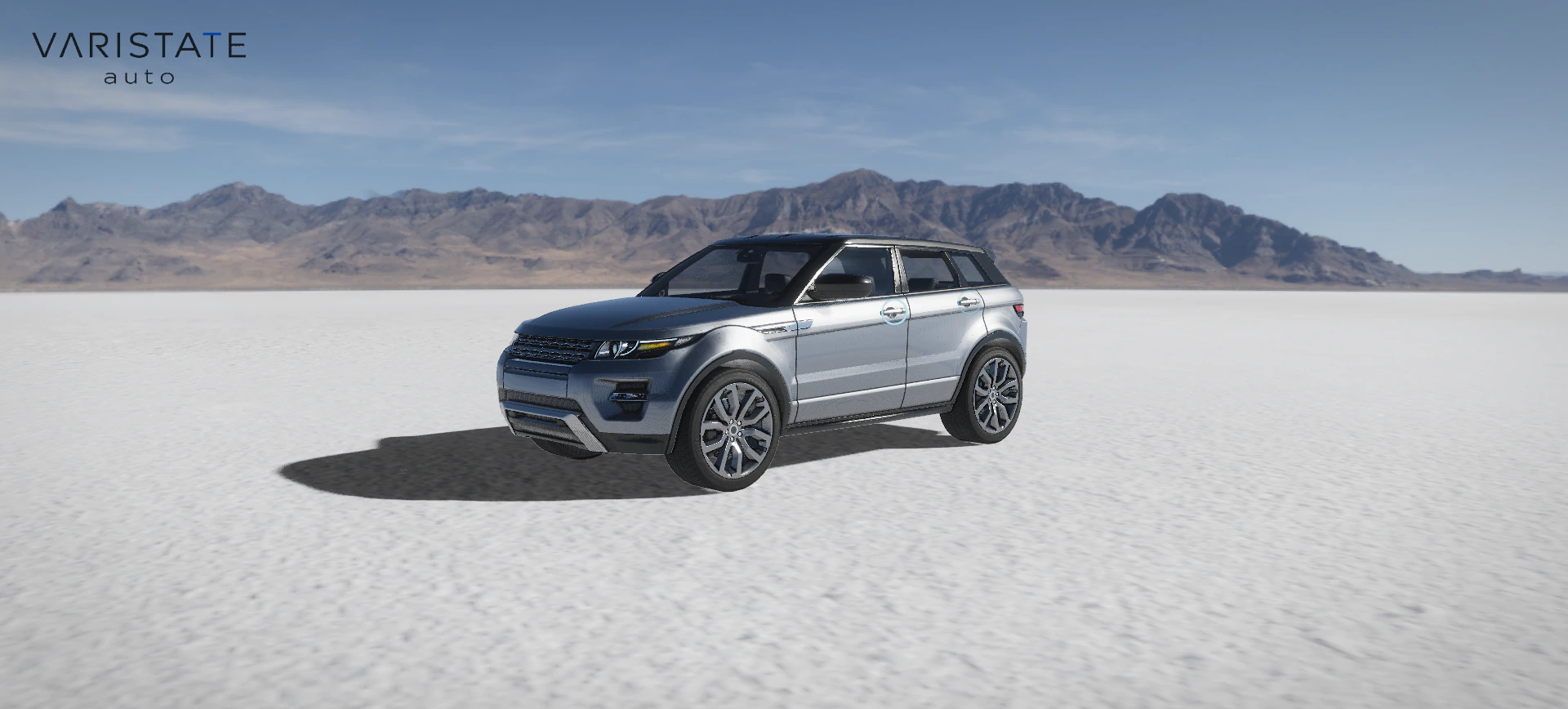
Keep the whole vehicle in view.
Seven authored body and livery variants, eight wheel colors, and three wheel finishes make up the exterior choices. Cabin upholstery and interior trim are configured independently.
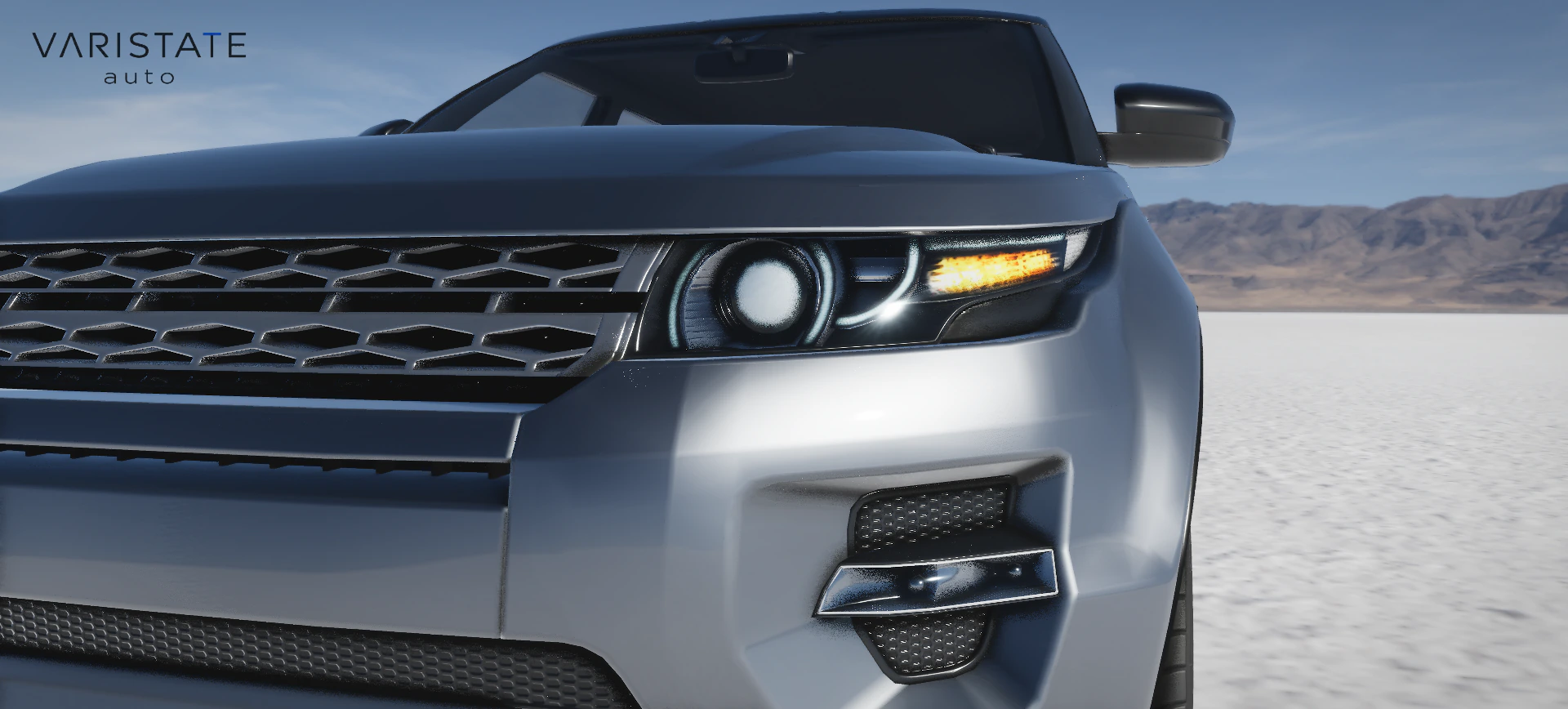
The finish choices stay tied to the live vehicle as the camera and environment change. A view of the grille and headlights is useful for checking the smaller surfaces that disappear in a wide shot.
The cabin gets its own attention.
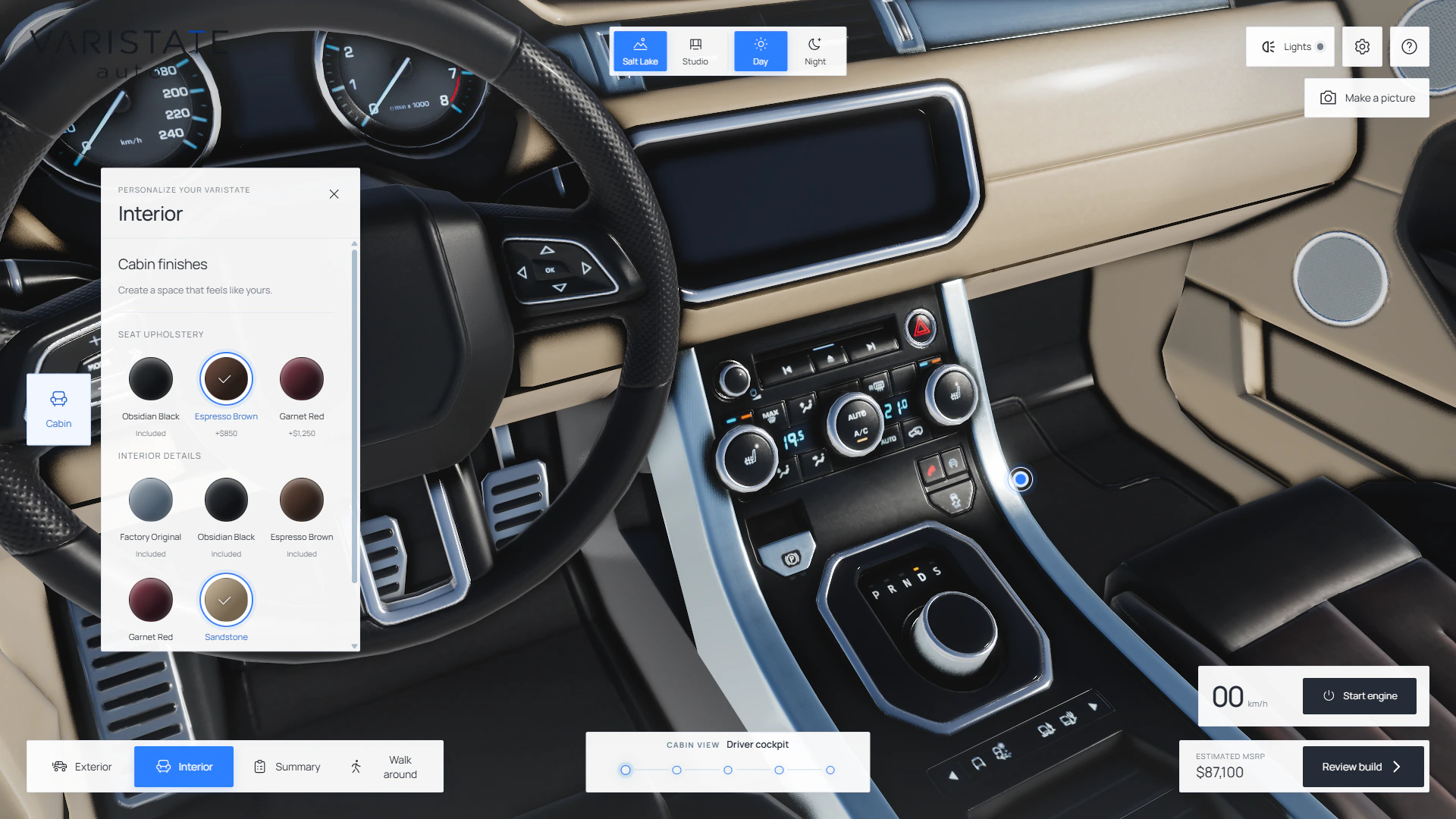
Door-guided entry moves the camera from outside to a useful interior position. The dashboard, upholstery, and trim can then be read at the scale where those decisions matter.
The material controls keep the surrounding cabin visible instead of asking visitors to imagine a full interior from a square swatch.
A finish has to survive a change of light.
The salt-flat scene makes reflections and the vehicle silhouette easy to judge. At night the headlights and darker surroundings change what stands out, while the configuration remains in place.
These are useful visual comparisons, rather than a promise that a screen can reproduce a physical paint sample exactly.
Walk around it. Then take the wheel.
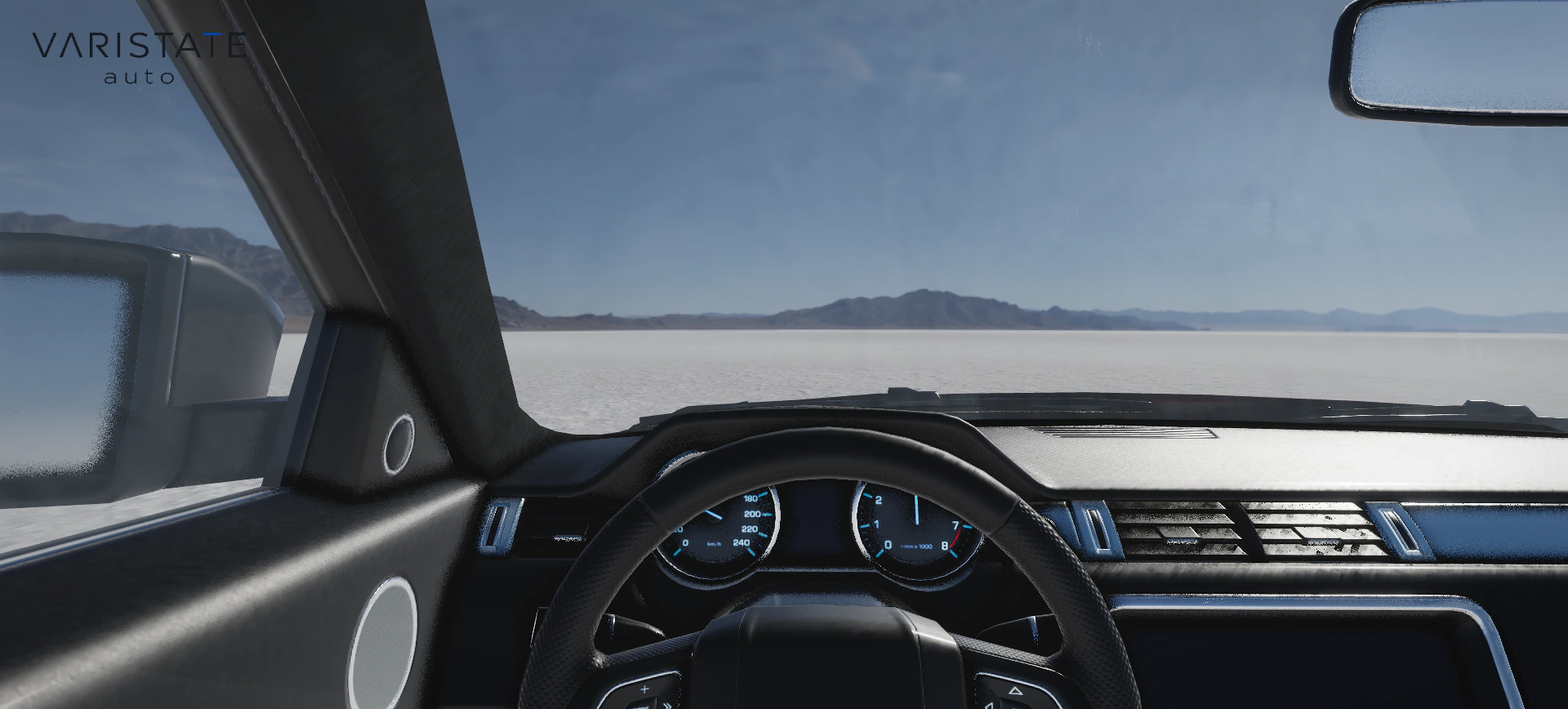
Walking uses collision handling to keep exploration connected to the scene. Driving uses a fixed-step, four-contact vehicle model to give acceleration, steering, and weight transfer a coherent response.
The driving model gives the configured SUV a sense of weight and a readable response, with a view from inside the cabin as well as outside.